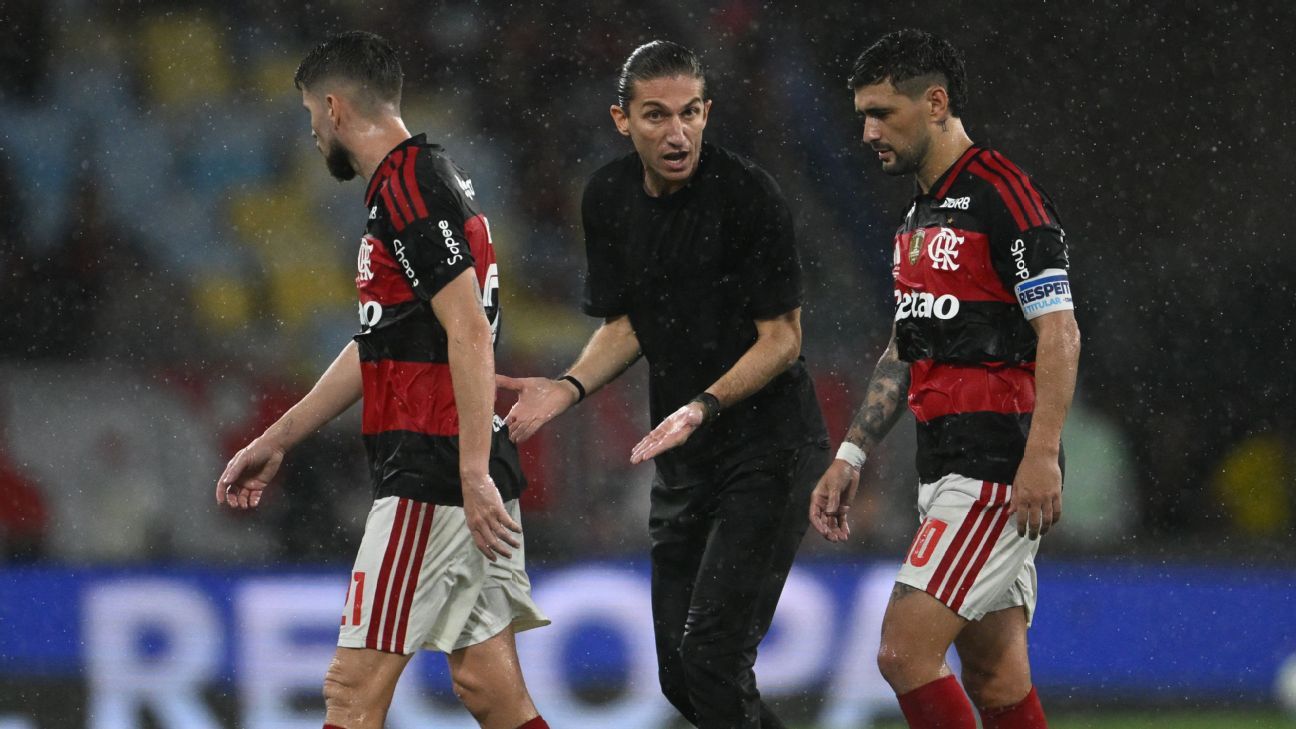
Beyond the 8-0: The Real Reasons for Filipe Luís' Flamengo Exit
The football world often produces paradoxical narratives, and few are as striking as a coach being dismissed just hours after leading his team to a dominant 8-0 victory. This was precisely the scenario that unfolded at Clube de Regatas do Flamengo, one of Brazil's most storied clubs, when they announced the departure of head coach Filipe Luís. The news sent shockwaves through the fan base and media, particularly given the emphatic win over Madureira in the Campeonato Carioca semifinal. However, behind the deceptive luster of that eight-goal thrashing lay a complex web of factors that ultimately led to the decision. To truly understand why
Filipe Luís demitido became a reality, one must look far beyond a single result and delve into the mounting pressures, performance inconsistencies, and strategic missteps that defined Flamengo's early 2026 season.
The Illusion of the 8-0: Why Victory Wasn't Enough
While an 8-0 scoreline might suggest a team in peak form, for a club with Flamengo's ambitions and investment, such a result against a lesser opponent in a regional tournament often serves more as a fleeting reprieve than a definitive statement of recovery. The official announcement, made in the early hours of Tuesday, March 3rd, highlighted the administration's resolve to make a change despite the immediate on-field success. This wasn't merely a knee-jerk reaction; it was the culmination of weeks of intense scrutiny and dissatisfaction stemming from a below-par start to the year.
The pressure on Filipe Luís had been building steadily. High-profile defeats in critical competitions had eroded confidence, and a dominant victory, while welcome, couldn't erase the memory of those recent failures. It's a stark reminder that in top-tier football, especially at clubs like Flamengo, every match is part of a larger narrative, and a single positive outcome, no matter how spectacular, can rarely outweigh systemic issues or a string of disappointing performances. For a deeper dive into the immediate aftermath, you might find our analysis on
Filipe Luís Fired by Flamengo: Why 8-0 Win Wasn't Enough illuminating.
A Tumultuous Start to 2026: Trophy Drought and Performance Dip
The primary catalyst for Filipe Luís's dismissal was undoubtedly Flamengo's inability to secure crucial silverware in the nascent stages of the 2026 season. For a club that boasts one of the largest budgets and most talented squads in South America, falling short in significant competitions is simply not an option. Two specific trophy losses weighed heavily against the coach:
*
Recopa Sudamericana Defeat: Flamengo faced Argentine side Lanús in the Recopa, a battle between the Copa Libertadores and Copa Sudamericana champions. The Rubro-Negro suffered a 1-0 defeat in Argentina, followed by a disappointing 3-2 loss at their spiritual home, the Maracanã. An aggregate 4-2 defeat to an Argentinian side, especially at home, was a bitter pill for fans and management to swallow.
*
Supercopa Rei Reversal: The Supercopa Rei (formerly Supercopa do Brasil) pitted Flamengo against arch-rivals Corinthians in Brasília. A 2-0 defeat meant another opportunity for early-season glory slipped away. Losing to a direct domestic competitor in a final further amplified the pressure.
These two setbacks meant Flamengo had already missed out on two national and continental titles by early March. Such a record is simply unacceptable for a club of Flamengo's stature, particularly one accustomed to winning ways. The contrast with Filipe Luís's previous successes was stark. In 2025, his Flamengo side had swept the Campeonato Brasileiro, Copa Libertadores, Supercopa, and Carioca, marking one of the most successful years in the club's illustrious history. Even in 2024, he had guided them to the Copa do Brasil title. His overall record of 63 wins, 23 draws, and 15 losses in 101 games, with an impressive 69.9% win rate, and five titles – making him the second most decorated coach in club history (tied with Jorge Jesus and Flávio Costa) – underscored his previous achievements. However, the immediate past often takes precedence, and the five defeats suffered in 2026 alone, combined with the lost trophies, signaled a worrying trend.
The Lingering Shadow of 2025: Squad Fatigue and Planning Blunders
Another significant factor contributing to Flamengo's early 2026 struggles was the lingering effect of the grueling 2025 season. Flamengo's calendar was packed, culminating in their participation in the FIFA Intercontinental Cup (formerly Club World Cup) in December, where they narrowly lost the final to Paris Saint-Germain on penalties on December 17th. This meant the players had an extremely short off-season, leading to significant physical and mental fatigue heading into 2026.
The club's initial strategy for 2026 involved utilizing players from the U20 squad for the early rounds of the Campeonato Carioca to allow the main team to recover and undergo a proper pre-season. However, this plan backfired spectacularly. The youth team struggled, putting Flamengo at risk of relegation in the state championship. This forced the club to accelerate the return of Filipe Luís and the senior squad, disrupting their intended preparation schedule. This rushed return meant the main players were thrown back into competitive action without adequate rest or pre-season training, exacerbating their fatigue and contributing to the inconsistent performances. The demanding 2026 calendar, with the Brasileirão starting in January, added another layer of complexity, making it impossible for the squad to gradually build rhythm. This internal crisis is further explored in
Flamengo Fires Filipe Luís: Unpacking the 2026 Season Crisis.
Tactical Shifts and Defensive Woes: Unraveling Flamengo's On-Field Identity
Under Filipe Luís, Flamengo had often been lauded for its defensive solidity, a cornerstone of their successful 2025 campaign. However, this defensive robustness appeared to crumble in 2026. The team conceded 14 goals in just 12 matches, averaging more than one goal per game – a concerning statistic for a team with title aspirations. This defensive vulnerability was highlighted in matches against Fluminense and São Paulo, both resulting in 2-1 defeats in the Carioca and Brasileirão, respectively, before the Recopa final losses.
The statistical decline was stark: in 2025, Flamengo had only lost 11 matches throughout the entire year. By early 2026, they had already accumulated seven defeats in just 15 games. This significant increase in losses, coupled with the erosion of defensive stability, pointed towards a deeper tactical or motivational issue. Whether it was the coach's inability to adapt to the squad's fatigue, a loss of focus from the players, or an unaddressed tactical flaw, the team's on-field identity seemed to be unraveling, contributing heavily to the decision that
Filipe Luís demitido was the necessary course of action.
Filipe Luís's Legacy and Flamengo's Path Forward
Despite the abrupt ending, Filipe Luís leaves Flamengo as a highly successful coach, having amassed five titles and an impressive overall record. His transition from a legendary player to a successful coach for his former club was a story many hoped would continue for years. The club's official statement expressed gratitude for his contributions and wished him success, acknowledging his significant role in their recent history. He will be remembered for the glorious triumphs of 2025 and 2024, achievements that cemented his place in Flamengo's pantheon.
However, the reality of top-tier football is that past glories, no matter how recent or significant, often do not guarantee future job security. The relentless pressure for immediate results, the substantial financial investment in the squad, and the expectation of continuous trophy accumulation meant that the early 2026 slump could not be tolerated. For Flamengo, the search for a new coach will now begin, with the immediate objective of stabilizing the team, regaining defensive solidity, and returning to their dominant form to compete for all available titles. For Filipe Luís, this experience, though bittersweet, marks a significant chapter in his burgeoning coaching career, offering valuable lessons as he seeks his next challenge.